Welcome to Jinan Jiaruichang Machinery Equipment Co., Ltd.
What is the difference between a commercial gas rice steamer and an electric commercial rice steamer
Working Principle
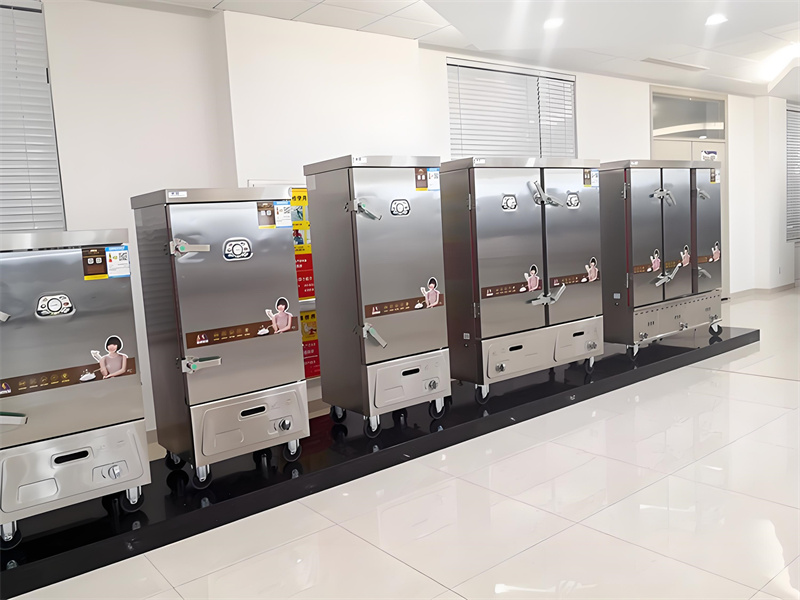
Gas Steam Oven
The gas steam oven operates by burning gas to generate heat, which then boils water into steam for cooking food. It typically consists of components such as a burner, steam generator, water supply system, and exhaust system. During operation, the heat produced by gas combustion heats water in the pipes, generating steam. This steam enters the cooking compartment through steam outlets to heat the food.
Electric Steam Oven
The electric steam oven uses electric heating elements to convert electrical energy into thermal energy, heating water in a bottom-mounted steam generator to produce steam. The steam transfers heat to the food within a sealed chamber, ensuring rapid cooking while preserving moisture and nutrients. A temperature control system continuously monitors and adjusts the internal temperature to maintain stability within the preset range, achieving efficient steaming.
Key Differences
1. Energy Source
commercial gas rice steamer use gas combustion to generate steam.
electric commercial rice steamer rely on electricity to produce steam.
2. Efficiency
commercial gas rice steamer heat faster, generating steam almost instantly, and are ideal for high-efficiency cooking scenarios. While they consume less electricity, they require gas resources.
electric commercial rice steamer have slower preheating times but higher thermal efficiency. They are suitable for automated cooking with minimal supervision, though they consume more electricity. For household use, gas models may save on energy costs, whereas electric models offer eco-friendly advantages.
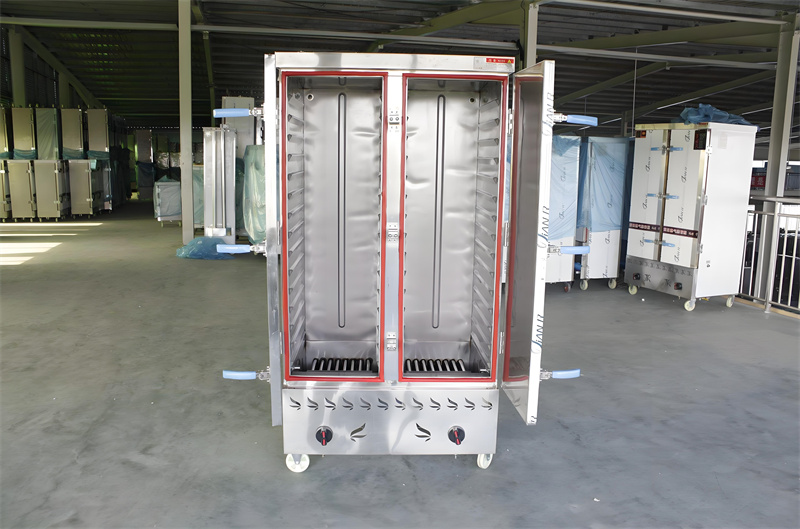
3. Convenience
Gas models require a gas line connection and manual ignition.
Electric models need a power supply and can be activated with a button.
4. Control Method
Gas ovens typically use manual controls (e.g., adjusting gas valves and flame intensity).
Electric ovens feature electronic or digital interfaces for precise temperature and timer settings.
5. Safety
Electric ovens pose minimal combustion or explosion risks due to their resistive heating elements. Maintenance is also simpler.
Gas ovens, while safe, produce minor noise and exhaust emissions during operation. Electric models are generally more reliable for household safety.
6. Cost
Operational costs depend on regional energy prices. Gas ovens may be more economical in areas with low gas prices, while electric models could be cost-effective where electricity is cheaper.
For prices please refer to (What is the commercial rice steamer price)
FAQ
Q1: What is the main difference between a gas and an electric commercial rice steamer?
A1: The key difference lies in the energy source. Gas rice steamers use gas combustion to produce steam, while electric models use electric heating elements. This impacts their heating speed, operating cost, and installation requirements.
Q2: Which type of commercial rice steamer is more energy-efficient?
A2: Gas steamers heat water faster and are ideal for high-demand kitchens due to instant steam generation and lower electricity usage. Electric steamers, although slower to preheat, have better thermal efficiency and are more suitable for automated, low-supervision environments.
Q3: Which commercial steamer is safer to use—gas or electric?
A3: Electric steamers are generally safer, as they don’t involve open flames or combustion. They pose minimal risk of explosion and feature simpler maintenance. Gas steamers, while safe, do produce noise and emissions and require proper ventilation.
Q4: How should I choose between a gas and electric commercial rice steamer?
A4: Consider your local energy prices, kitchen layout, and workflow needs:
Choose gas models if gas is affordable and you need fast steaming.
Choose electric models if you prefer digital control, quieter operation, and lower safety risks.