Welcome to Jinan Jiaruichang Machinery Equipment Co., Ltd.
How to choose a dough divider machine
In the modern baking industry chain, choosing a dough divider directly impacts product consistency and production efficiency. Legacy issues from manual operations—such as ±5g weight variance and up to 30% fluctuations in daily output—are being gradually eliminated by intelligent equipment.
I. Introduction
According to data from a leading bakery chain, manual dough dividing results in raw material waste rates as high as 6.2%, while machine-based dividing can control variance within ±1g. This not only ensures uniform product weight in every batch but also significantly reduces ingredient costs. For central kitchens handling 2,000 dough pieces daily, selecting a high-speed model capable of processing 50kg per hour (e.g., JRC MP30 series) can boost capacity by 40%, effectively managing order peaks.
II. Four Key Factors to Consider Before Selection
1. Output Adaptation Matrix
Production needs vary by scale:
Community bakeries: Recommended to use compact machines with a single-batch capacity of 5–10kg (e.g., Hobart N50), yielding 500–1,000 pieces/day.
Central kitchens: Require high-speed machines with output over 50kg/hour. The JRC MP30 series, using a dual-screw feeding system, delivers a consistent rate of 200 dough pieces per minute.
2. Solutions for Different Dough Types
Each dough type requires specific machine features:
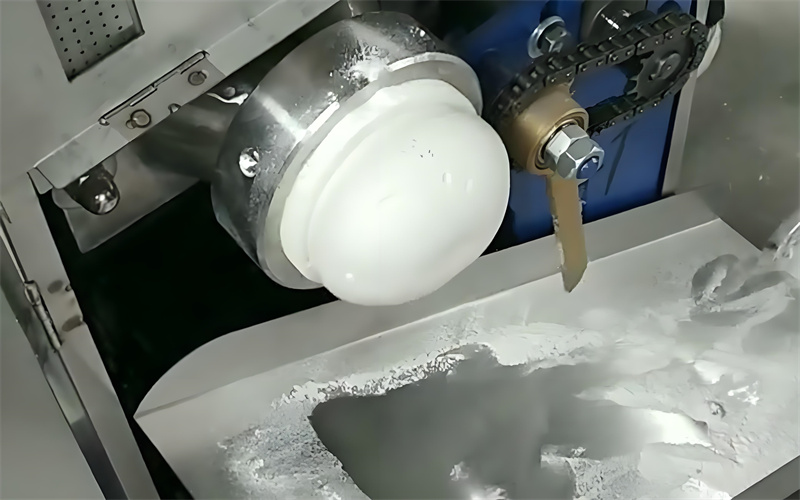
High-hydration dough (e.g., baguette dough): Needs non-slip conveyor belts and servo pressure control systems (JRC500 series patented tech).
Hard dough (e.g., bagel dough): Requires cutting blades with the hardness of HRC58 or above.
Sugar- and oil-rich doughs: Must use food-grade silicone scrapers to prevent sticking.
3. Automation Evolution Path
From manual (suitable for home use) to fully automated systems:
Semi-automatic machines (e.g., Seydelmann M40): Handle automatic weighing and dividing.
Fully automatic machines (e.g., JRC Pro800): These integrate the entire process—kneading, dividing, shaping, cutting labor costs by up to 70%.
4. Balancing Space and Investment
Equipment budgets should match production scale:
Under $10,000: Entry-level models (e.g., Baker’s Pride) meet basic needs.
Around $30,000: Machines like the Rational RM300 support modular expansion.
For kitchens under 15㎡, opt for compact machines; central kitchens can install mobile track systems for flexibility.
III. Core Specifications
1. Capacity & Efficiency
The batch size should align with the production rhythm to avoid frequent refilling.
Processing speed: Mainstream machines handle 50–200 dough pieces per minute; high-speed models require stable feeding systems.
2. Precision Control
Equipment maintenance ±1g variance ensures product consistency.
High-end models use smart algorithms to dynamically adjust pressure, reducing ingredient waste.
3. Build Quality & Durability
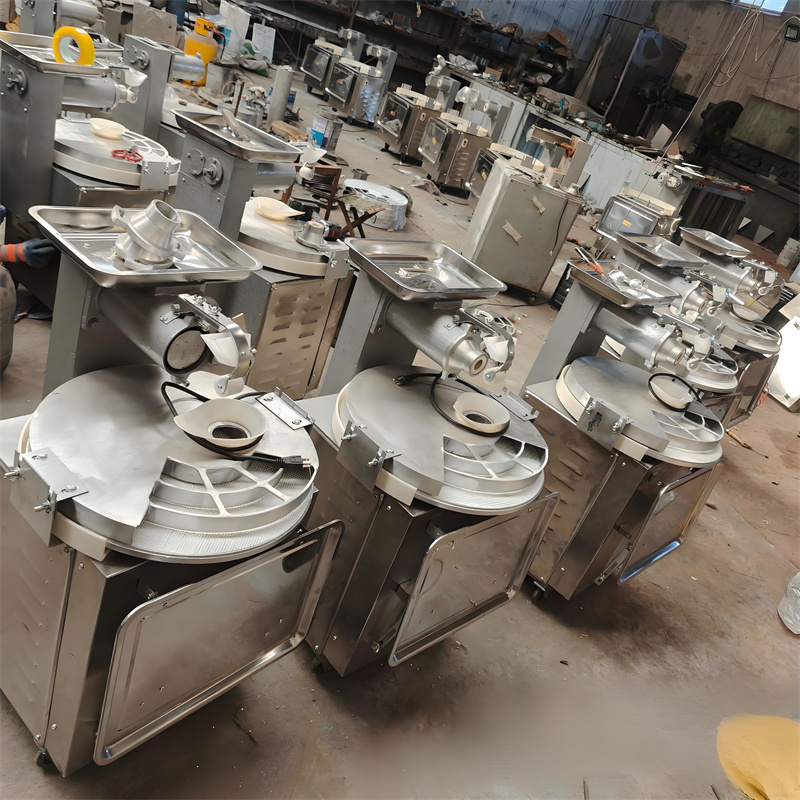
Food-grade stainless steel bodies and wear-resistant silicone belts are standard.
The bearings and cutting blades should be made of high-strength alloy to extend the machine's lifespan.
4. Energy Efficiency & Noise
Low power consumption models (≤2kW) are ideal for extended use.
Quiet operation (≤60 dB) improves the working environment.
IV. Conclusion
Selecting the appropriate dough divider involves finding the right balance between efficiency, cost, and product quality. By clearly defining your needs, focusing on key parameters, and tailoring the choice to your production environment, you'll find the equipment best suited to empower your baking business.
For price, pls refer to (What is the dough divider rounder machine price?)