Welcome to Jinan Jiaruichang Machinery Equipment Co., Ltd.
Why Large Bakeries Prefer to Partner with a Dough Divider Manufacturer
Walk into a large-scale bakery that produces over 50,000 loaves of bread a day, and you’ll notice one thing: manual dough dividing has virtually disappeared. As consumer demand shifts from "handmade uniqueness" to "standardized mass production," bakeries with daily outputs exceeding 10,000 units face a dual challenge. Manual dividing maxes out at just 200 dough pieces per hour, with weight deviations often exceeding 10 grams. This can’t keep pace with automated production lines and fails to guarantee uniform products. In this context, partnering with a professional dough divider manufacturer has become the key to overcoming the limitations of large-scale production.
I. Efficiency
The efficiency advantage of automated machines is nothing short of revolutionary. A single intelligent dough divider can accurately handle 1,500 dough pieces per hour, increasing output by more than 7 times compared to manual labor.
After introducing automated equipment, one chain bakery saw its daily capacity surge from 8,000 to 50,000 units, eliminating peak-time supply bottlenecks. More importantly, these machines support 24/7 continuous operation, perfectly aligning with assembly line workflows. While human workers need breaks, machines operate like tireless craftsmen, consistently delivering uniform dough for proofing and baking. This increases production stability by over 60%.
II. Quality
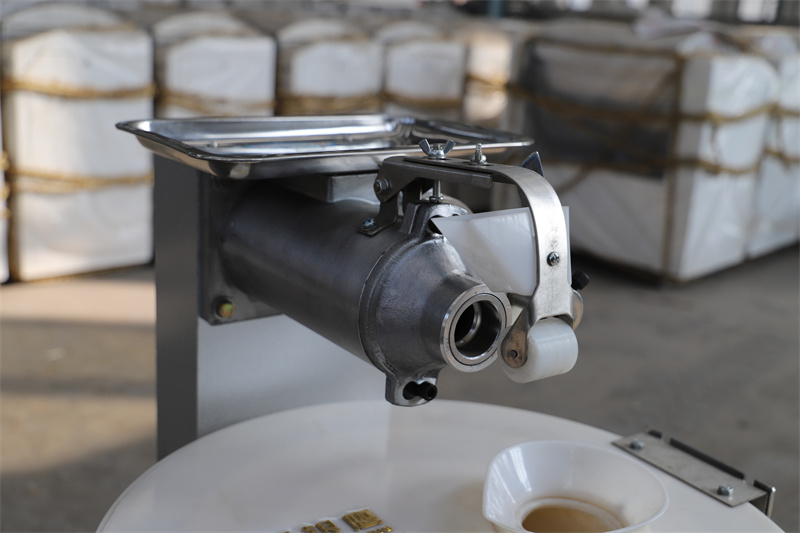
Bread-making is a precision science—just a 5g weight difference can alter baking time by up to 2 minutes, affecting both crust color and internal texture. A high-quality dough divider rounder from a trusted dough divider manufacturer can maintain weight deviation within ±3g, ensuring every piece of dough looks and bakes identically.
What’s more, machines adapt intelligently to different dough types. When working with high-hydration baguette dough, the divider reduces pressure to prevent sticking. For puff pastry dough, it uses low-temperature cutting to avoid melting fats. These refined techniques are beyond the capability of generic machines. One bakery lab reported a jump in finished product pass rate from 85% to 98% after switching to custom-built equipment.
III. Cost
Over a 10-year cycle, the total cost of ownership (TCO) for equipment from a professional dough divider manufacturer is 40% lower than in-house development. Manufacturers often include preventive maintenance programs, keeping breakdown response times under 2 hours and maintaining an overall equipment effectiveness (OEE) above 85%.
According to financial reports from a publicly listed bakery company, access to a recipe database from the manufacturer helped reduce their R&D cycle by 22%, accelerating product innovation.
IV. Future Collaboration
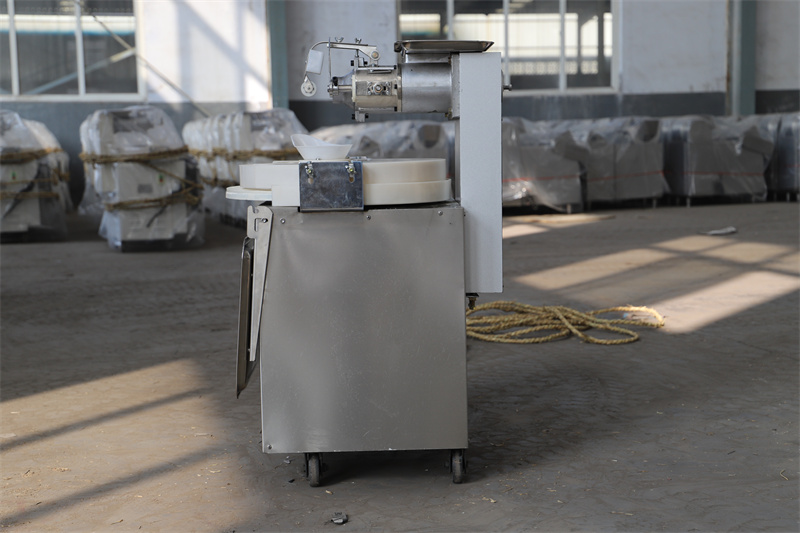
The value of working with a dough divider manufacturer goes far beyond the equipment itself. Their stable parts supply chain eliminates downtime caused by waiting for replacement components. In co-development initiatives, bakeries can participate in industry standardization efforts—such as low-temperature sterile dough dividing, which is now a staple in high-end baking.
When one brand needed to develop a triangle-shaped Danish pastry, the manufacturer delivered a custom mold within 3 days, cutting their concept-to-product timeline in half. This type of “production efficiency partnership” is rapidly becoming the backbone of industrial transformation for major bakeries.
Conclusion
From artisanal workshops to smart factories, a dough divider manufacturer is no longer just a supplier—they’re a strategic partner in scaling operations. When efficiency, quality, cost, and innovation converge, collaboration with experts isn’t just an option—it’s the only path forward for bakeries aiming to thrive in the industrial age. Choosing the right dough divider rounder and the manufacturer behind it is not just a purchase—it's an investment in long-term growth.
FAQ
Q1: Why do large bakeries prefer using dough divider machines over manual labor?
A1: Manual dough dividing maxes out at 200 pieces per hour and often results in weight variations over 10g. In contrast, automated dough dividers process up to 1,500 pieces per hour with ±3g accuracy, enabling bakeries to meet high production volumes while ensuring consistency and reducing labor dependence.
Q2: How does partnering with a dough divider manufacturer improve product quality?
A2: Professional dough divider manufacturers provide machines that adjust to different dough types—soft for high-hydration dough, cool for pastry dough—to ensure optimal handling. This precision boosts finished product pass rates from 85% to over 98%, delivering better crusts, texture, and baking uniformity.
Q3: What cost advantages come from working with a dough divider manufacturer?
A3: Over a 10-year period, the total cost of ownership is 40% lower than self-developed systems. Manufacturers also provide preventive maintenance, fast part replacement, and access to recipe databases—helping bakeries reduce downtime and speed up product development.
Q4: Can dough divider manufacturers support custom product development?
A4: Yes. Leading manufacturers offer rapid customization services such as mold creation, co-development of new dough formats, and participation in industrial standardization. For example, one bakery launched a new triangle pastry in record time thanks to a custom mold delivered in just 3 days.
Related links:
Looking for a reliable dough divider rounder for sale? Four tips to consider!