Welcome to Jinan Jiaruichang Machinery Equipment Co., Ltd.
What is a commercial dough divider?
Introduction
Dough dividing is the first and most critical step in determining the final product’s quality on the workstations of bakeries, steamed bun factories, and central kitchens. Manual dividing often leads to weight inconsistencies, resulting in irregular sizes after baking. This not only affects the appearance of the products but also makes standardized production extremely difficult. For chain restaurants and food processing plants, the inefficiency and instability of manual operations have become a major bottleneck for scaled-up production.
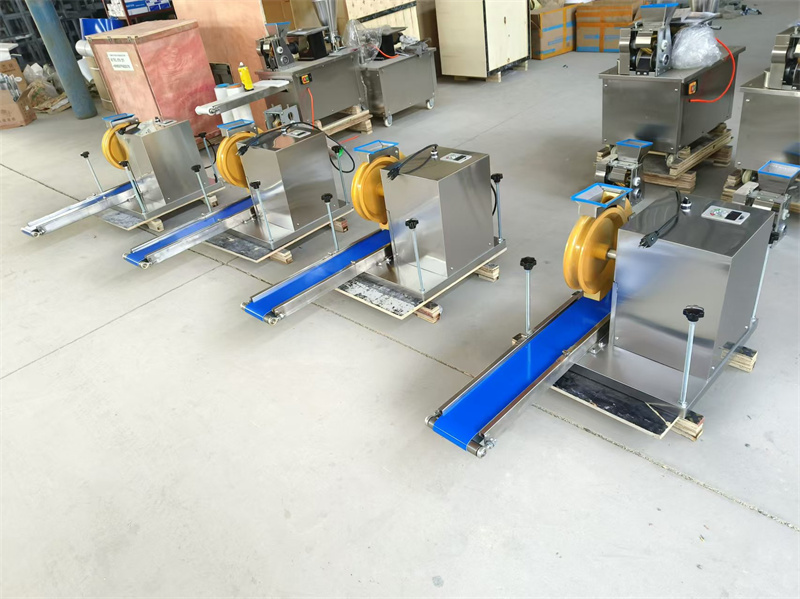
The emergence of dough divider machines is aimed at solving this exact problem. By replacing human estimation with mechanical precision, they ensure that every piece of dough has nearly identical weight—becoming an essential stepping stone in the transition from manual production to industrialized food processing.
Dough Divider Rounder Machine
1. Basic Definition
A dough divider rounder machine is an automated device that performs quantitative cutting, accurately dividing a large mass of dough into evenly sized portions. These divided dough pieces are then processed through rounding machines, dough sheeters, or forming molds—serving as the foundation for standardized production. It is widely used in processing bread, steamed buns, dumplings, pastries, and various other flour-based products.
2. Working Principle
Its workflow can be summarized in three key steps: Dough Feeding → Measuring → Dividing.
Step 1: Consistent Dough Feeding
The dough is loaded into the feed inlet, where an auger (screw conveyor) at the bottom pushes the dough forward at a constant speed—like a conveyor belt—toward the dividing zone. This ensures smooth flow and prevents uneven cutting caused by dough jams or blockages.
Step 2: Intelligent Measuring
As the dough reaches the outlet, real-time weight monitoring is performed. For example, if the machine is set to divide 100g portions, built-in sensors measure the dough as it's conveyed. Once the dough reaches 100g, the system instantly sends a cutting signal.
Step 3: Precise Dividing
Upon receiving the signal, high-speed blades or custom molds instantly cut the dough. The entire process maintains an error margin of less than ±1%, meaning a 100g portion would weigh between 99g and 101g—far more accurate than the human eye can perceive.
Core Functions
High-Precision Dividing: Eliminates weight variance from manual dividing and supports standardized production.
High-Efficiency Operation: Capable of processing dozens to hundreds of dough pieces per minute, far exceeding manual capacity.
Flexible Adaptability: Suitable for various types of dough (soft, hard), shapes (blocks, strips), and weight ranges from 50g to 5kg.
Key Components
Dough Feeding Section:
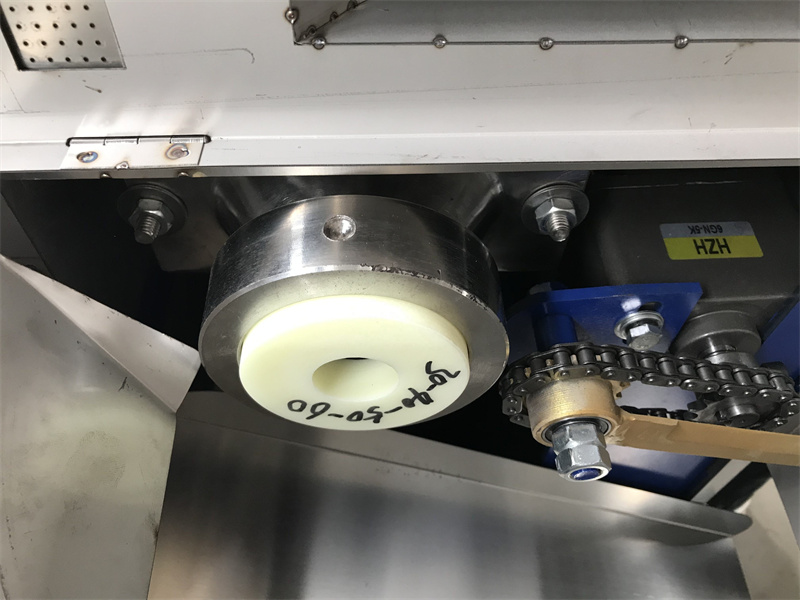
Includes the upper housing, chains, sprockets, feeding inlet, auger, auger housing, outlet adjustment port, and flour box.
Shaping Section:
Consists of the material inlet, forming plate, flat plate, rubber disc, and collection tray.
From the rough estimates of manual dividing to the precise cuts of mechanical processing, the dough divider machine harnesses the power of technology to move food production away from reliance on manual skill and toward consistency and efficiency. It’s more than just a piece of equipment—it is a bridge between traditional craftsmanship and modern industry, ensuring that every piece of dough becomes the starting point of a standardized and scalable production process, delivering a more reliable, hygienic, and efficient culinary experience.
FAQ
Q1: What is a commercial dough divider, and why is it important?
A1: A commercial dough divider is an automated machine that precisely divides dough into equal portions by weight. It replaces manual cutting to ensure uniformity, improve efficiency, and support standardized production in bakeries, central kitchens, and food factories.
Q2: How accurate is the dough divider machine?
A2: The machine maintains a weight accuracy of ±1%. For example, a 100g portion will weigh between 99g and 101g—far more consistent than manual dividing.
Related links: